The boys of 1882
Delve into the history of Tottenham Hotspur Football Club, celebrating the young men who dared to dream and laid the groundwork for a sporting legend.
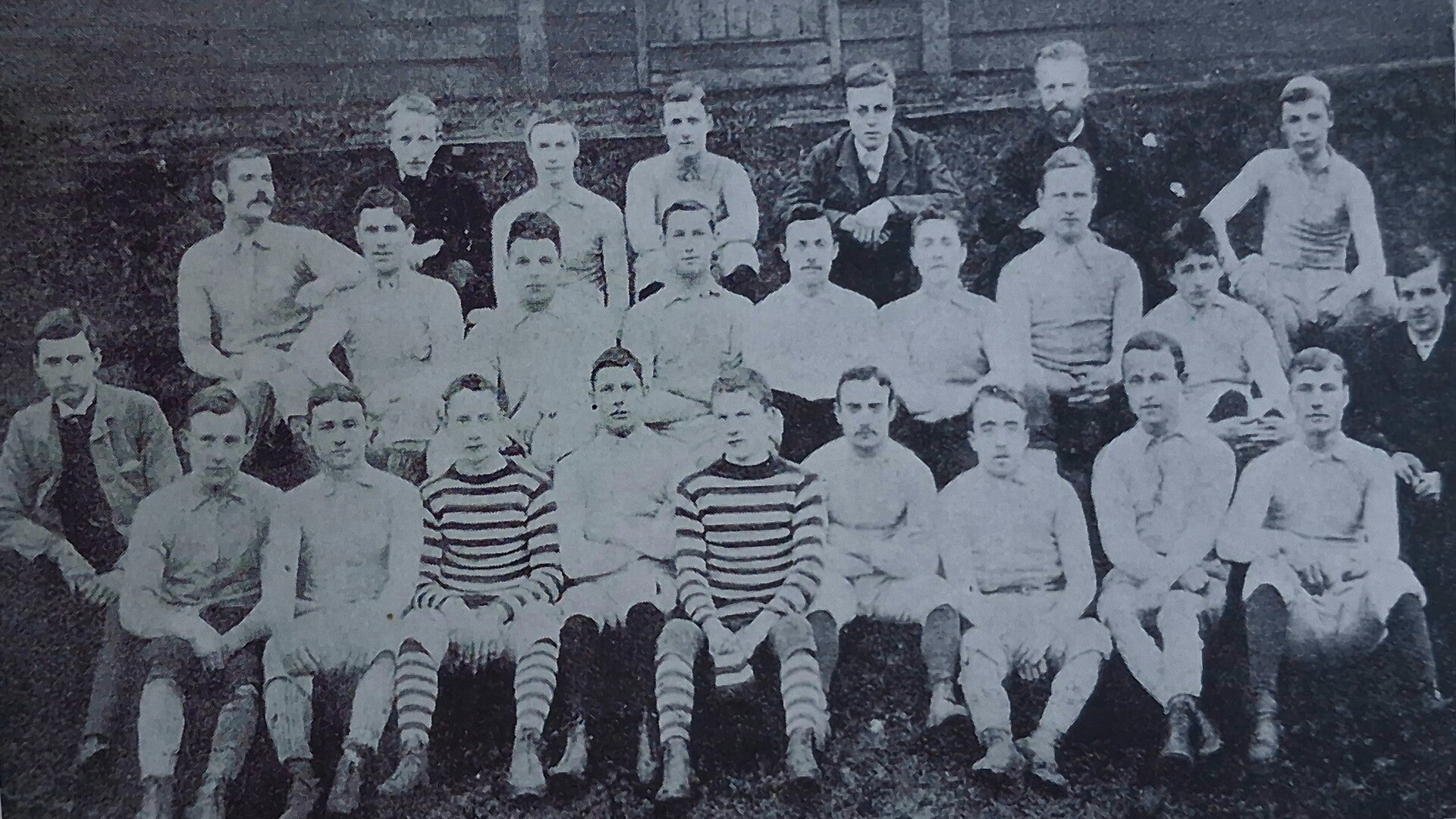
Hotspur Football Club
In 1882, a group of young men from Hotspur Cricket Club sought a winter activity to keep their competitive spirit alive. Little did they know, they were about to form a club that would etch its name into football history. Their passion and foresight created Tottenham Hotspur Football Club, a legacy that continues to inspire millions.

A legacy of pride and passion
Reading about the origins of Tottenham Hotspur evokes a powerful sense of nostalgia and pride. It reminds us of the humble beginnings of a club steeped in tradition. We hope this journey back to 1882 leaves you feeling informed about our roots and deeply proud of the heritage of our beloved club.

The original 11...
John Connell Anderson, Thomas Caldwell Anderson, Edward Beaven, Robert Buckle, Hamilton Casey, Lindsay Casey, Frederick Dexter, Stuart Leaman, John Thompson, P Thompson and Edmund Wall. These 11 names are those of our founding schoolboys back in 1882 and it is now my pleasure to tell you about their life and times - In 1882 to the grave.
John Connell Anderson was born in Tottenham on 12th August 1868 and baptised on 4th October at St John's. In 1882 he was living at 6 Ashfield Villas in Willoughby Park Road before moving to Stratford and beginning a career as an engine fitter. A well travelled man he appears to make several trips to Canada and as far as Yokohama, Japan before his sudden death on 11th January 1931 aged 62.
Thomas Caldwell Anderson was the younger brother of John. Born on 30th September 1869 he too was baptised at St John's. A bank clerk as early as 1891 he married Katie Findlay in Shanghai, China in 1904 and doesn't reappear back in England until 1921 now living in Willesden Lane, NW2 this time as a bank manager. In 1939 he is documented living in Frinton-on-Sea. Thomas died on 26th April 1942. A service was held for him at Ipswich Crematorium and his ashes were interred with his mother and father in Tottenham Cemetery.
Edward Beaven was born in nearby Edmonton in 1869 but by 1882 was living on the Tottenham High Road. He returned in 1894 to marry Eva Barner and spent the next 30 years living at Church Street, Edmonton as a clock and watch maker. He is listed as an employee of the Great Eastern Railway until his death on 2nd June 1933 at North Middlesex hospital. He was buried in Edmonton Cemetery
It is not wrong to say that Robert Buckle is perhaps the most pivotal of all our founding young men and his name is stamped all over the first almost two decades. Living in White Cottage on White Hart Lane from a few years old until around 1901 Bobby oversaw the inception of the club, the move to Northumberland Park and, in 1899, to White Hart Lane as well as professionalism in 1895 and the decision to become a PLC 3 years later. His move to Merton for the final 60 years of his life to start married life and raise 8 children meant he didn't watch the club for over 50 years but did keep in touch with results. Bobby was the last of our 'original 11' to pass away doing so on 14th April 1959 aged 90.
Hamilton Douglas Casey was born on 11th August 1867 and lived on Bruce Terrace before moving to Sherwood Lodge in Northumberland Park. He was another important figure making many appearances on the marshes and retained a keen interest as secretary after he stopped playing. It is said that he and his brother Lindsay painted the first goalposts used by the young men blue and white. Casey lived at 97 Northumberland Park with his parents until around 1913. His death was registered in Surbiton which was where his brother lived and as his illness was, described as 'several months long', I believe he moved there to be taken care of by Lindsay.
He died on 27th April 1914 and was buried in Tottenham Cemetery close to his parents John and Amelia.
Lindsay Ralfs Casey was born on 28th September 1865, his father John's 33rd birthday, and 2 years senior to brother Hamilton. He married Beatrice Keep at Holy Trinity Church in Philip Lane on 7th July 1898 continuing to live at Northumberland Park with his new wife. In 1918 he was awarded the freedom of London City before moving to Tulworth, Surbiton in 1915. At the age of 74 Lindsay died on 7th July 1940 - his wedding anniversary - and is buried with his wife in Tottenham Cemetery.
Not much is known of our next founder - Frederick William Dexter - who was born in Edmonton on 8th February 1867. He is one of the few to live outside Tottenham living at 2 Plevna Road, Edmonton and was a painter/decorator for most of his life. He died in his hometown on 1st July 1919.
Son of Robert and Eliza was Stuart Leaman who was the clubs first goalkeeper on the Tottenham marshes. Baptised at All Hallows where his parents had married he married his wife Elizabeth at Saint Thomas in Bethnal Green in 1887. A keen piano player this professor of music left England for Australia on the advice of a doctor. He was suffering with bright's disease and the warmer climate was considered his best chance of recovery. Sadly, this was not the case and aged just 33 he died on 16th September 1902 just several weeks after his wife and son Stuart had joined him in South Australia. His parents and brother Robert are buried in Tottenham and there is an inscription dedicated to Stuart on the family grave.
John Howard Thompson (no relation to Philip) played a very big part in those early years. Born on 28th February 1869 in Edmonton John lived at Belmont Lodge at 57 Northumberland park his entire life. He did briefly live in Enfield with his wife Florence but following her death in 1900 moved back to the family home. John died aged just 39 on 10th February 1909 during an operation and the loss was heavily received amongst friends and family back in Tottenham.
Born on 21st January 1871 Philip Thompson was the youngest of our founders and baptised at the nearby All Hallows Church. One of 6 brothers it was their uncle Captain Delano who lent them the field in which to play cricket shortly before 1882 with Hotspur CC. He lived on Park Lane until around 1892 and 2 years later married Mary Greener at Forest Hill. The family can be found at Beckenham before spending the next 25 years or so in Twickenham with Philip working as a timber broker. He was the second eldest surviving founder and died in Esperance nursing home in Eastbourne on 25th July 1958 aged 87.
Confused with Edward our founder was actually called Edmund Robert Wall and was born in Camden on 3rd February 1869. In 1881 the family had moved to 50 Elsdon Road (Near Lordship Lane) before relocating to Stoke Newington. No records of a marriage nor children exist for Edmund, a commercial clerk, and he died aged 52 on 29th August 1921.